


Organic Spices: Where to Start

WHAT DOES IT MEAN TO BE ORGANIC?
USDA Certified organic products must have at least 95% organic ingredients in order to bear the official organic seal on the package. Once certified, products can be sold, labeled, and marketed as organic. These regulations describe the specific standards required for you to use the word “organic”or the USDA Certified Organic Seal on food, feed, or fiber products. (USDA)
WHY BECOME CERTIFIED?
- Premium price points for premium organic products
- Gateway to fast-growing international organic markets
- Access additional funding and technical assistance available to organic producers
- Market power of the USDA Certified Organic Seal and international verification programs
- Entry into growing food service delivery market for organic foo
WHO QUALIFIES TO BECOME ORGANIC?
- Farmers, growers, and producers
- Processors, handlers, brokers, packers, wholesalers, or distributors
- Restaurant owners, retailers, or brand owners
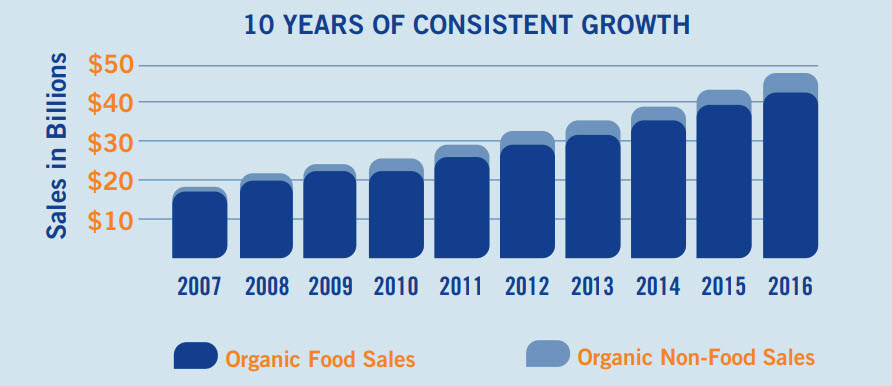
TOTAL U.S. ORGANIC SALES AND GROWTH
The organic food market has shown consistent past growth and positive projected growth. The global organic spices market is expected to grow 7.85% CAGR through 2021.
WHAT IS THE CERTIFICATION PROCESS LIKE?
Step 1: Develop an organic system plan with producers or handlers to detail how these operations will comply with USDA or international regulations.
Step 2: Implement the organic system plan and have it reviewed by a certifying agent. Organic operations are certified by private, foreign, or state entities that have been accredited by the USDA.
Step 3: The inspection. Every operation that applies for organic certification is first inspected on-site by a certifying agent who reviews practices based on the type of facility.
Step 4: Have a certifying agent review the inspection report. The inspector presents observational findings, a risk assessment, and relevant environmental and product samples to the certifying agent following observation of practices on the farm or facility compared to the organic system plan.
Step 5: Decision. If an operation complies with the rules, the certifying agent issues an organic certificate listing products that can be sold as organic from that operation
WHAT ABOUT WORKING WITH SUPPLIERS?
Selecting an organic spice supplier is a process similar to any other supplier verification process.
Make sure the supplier’s certificate is dated in the last year and outlines the scope of products covered.
Require your suppliers to regularly complete comprehensive testing with a third-party laboratory to verify that products are consistently free of non-organic contaminates.
Regularly audit your suppliers to verify that their organic system plan is upheld. Conduct environmental testing on-site to gauge contamination risks and inquire about record keeping practices.
Questions on how this information is applicable to your food process?
Additional Resources
Spice Industry Rapid Test Methods: Near - Infrared Spectroscopy Applications
Produce Industry Webinar Series: Organic Integrity Management
Click here or the image below to download the infographic!


