
JavaScript is disabled. Please enable to continue!

Mobile search icon
More Resources >> Our People >> John Scanga

John Scanga

Sidebar Image
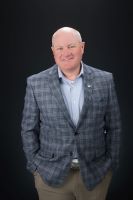
John Scanga, PhD

John Scanga, PhD

Chief Scientific Officer for North American Meat Division

John received his B.S. degree in Animal Sciences, his M.S. degree in Meat Science in 1997, and his Ph.D. in Animal Sciences in 1999, all from Colorado State University in Fort Collins, CO.

He developed a connection to agriculture at an early age; through work on his family’s ranching operation in central Colorado. He enrolled at Colorado State University in the fall of 1992 majoring in Animal Sciences; he competed on the CSU Meat Judging Team in 1994 and worked as an employee in the meat laboratory where his interest in meat processing and the meat industry began to grow.

Following the completion of his M.S (1997) and Ph.D. (1999), John joined the faculty at Colorado State University as an Assistant Professor and Extension Meat Specialist. He managed the day-to-day operations of the Meat Science Teaching and Research Laboratory and was promoted to Associate Professor in 2005.  He then left the university and joined IEH Laboratories and Consulting Group in January of 2008 as Vice President of Technical Services, where he continued to merge scientific concepts with industrial applications for managing and improving the safety of meat and non-meat foods, and improving food processing plant operational efficiencies.  In addition, he provided clients with regulatory, crisis event, and HACCP training and support.

John joined Elanco Animal Health in November of 2009 as an Associate Senior Technical Consultant where he brought a consumer focus and an emphasis on balancing animal productivity and performance with consumer acceptability. His work there focused on red meat safety, red meat quality and international trade.

John has been an author or co-author on over 70 refereed scientific publications on red meat quality and safety and has presented the findings of his work through numerous invited in presentations both the U.S and internationally.  

John also has a passion for service.  He currently is the chair of the Colorado Beef Council and has served as President of the Weld RE-9 school board, Weld County Fair Board and is a member of the Highland High School FFA Advisory Committee. 

John and his wife Chauna live on a diversified farming operation in Ault, Colorado.  Their family time is consumed with agriculture, farming, riding reigning horses and traveling.  His hobbies include backcountry snowmobiling and bird hunting. He  also works as a visiting professor in the Department of Animal Sciences at Colorado State University, where he first started his academic career. 

Below are resources from Dr. Scanga:



Infrared spectroscopy is a powerful analytical tool for rapid, nondestructive measurement. But despite its advantages, IR often develops a reputation for being unreliable or not accurate as primary methods. Keep reading to learn more about how to build and validate a reliable model.


As we look back on 2025, one thing is clear: innovation didn’t slow down, it got sharper. Across major food, beverage, supplement, and ingredient tradeshows this year, the conversation shifted away from flashy novelty and toward proof, performance, and practicality. Here is our perspective on what to expect in 2026.


Our "Behind the Science" series looks at food testing from the perspective of the testers and industry experts who devote their careers to it. In this episode, Eurofins Chief Scientific Officer, Dr. Doug Marshall speaks with Dr. Kangming Ma, President at Eurofins QTA. Originally aired on January 20, 2026.


The production and distribution of foods, beverages, nutraceuticals, and related products can offer a wide variety of unique challenges at every stage of development and release, including off-odors and off-flavors, discolorations, and the presence of foreign materials. This webinar covers various analytical strategies for troubleshooting these challenging problems. Originally Aired on January 21, 2026.


How do you know when it makes sense to bring in product development support and when it doesn’t? Based on what we see across brands, ingredient companies, and startups, here’s a practical way to think about it.


The rapid rise of mocktails and alcohol alternatives signals a deeper shift in consumer behavior. As the category matures, brands are discovering that removing alcohol is only the beginning.


As the category of sports nutrition matures, so does the science behind it, and few ingredients illustrate that shift better than creatine. Once viewed as a niche performance supplement, creatine has entered the mainstream, driven by a growing body of research, broader consumer education, and innovation in product formats.


In the dietary supplement and ingredient industry, protecting consumer health and meeting regulatory expectations are nonnegotiable. One critical aspect of quality control is residual solvent testing. Residual solvents, volatile chemicals used during manufacturing, can remain in products if not properly removed.


As the pet supplement market continues to expand, particularly in preventative care, accurate quantification of MSM has become essential. Manufacturers require robust analytical methods to ensure that label claims are substantiated and that formulations meet quality standards while complying with AAFCO ingredient definitions and state feed regulations.


When evaluating fiber testing approaches, it’s important to review how results differ across sample matrices tested by both the new and previous methods. More laboratories are implementing the Rapid Integrated Dietary Fiber Methods - AOAC Official Methods 2017.16 and 2022.01. The AOAC 2017.16 method measures the insoluble fiber fraction (IDF) and soluble fiber fraction that precipitates in 78% ethanol (SDFP) together, and separately measures the soluble dietary fiber not precipitated in 78% ethanol (SDFS) by HPLC.


https://www.eurofinsus.com/food-testing