
JavaScript is disabled. Please enable to continue!

Mobile search icon
More Resources >> Our People >> John Scanga

John Scanga

Sidebar Image
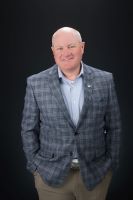
John Scanga, PhD

John Scanga, PhD

Chief Scientific Officer for North American Meat Division

John received his B.S. degree in Animal Sciences, his M.S. degree in Meat Science in 1997, and his Ph.D. in Animal Sciences in 1999, all from Colorado State University in Fort Collins, CO.

He developed a connection to agriculture at an early age; through work on his family’s ranching operation in central Colorado. He enrolled at Colorado State University in the fall of 1992 majoring in Animal Sciences; he competed on the CSU Meat Judging Team in 1994 and worked as an employee in the meat laboratory where his interest in meat processing and the meat industry began to grow.

Following the completion of his M.S (1997) and Ph.D. (1999), John joined the faculty at Colorado State University as an Assistant Professor and Extension Meat Specialist. He managed the day-to-day operations of the Meat Science Teaching and Research Laboratory and was promoted to Associate Professor in 2005.  He then left the university and joined IEH Laboratories and Consulting Group in January of 2008 as Vice President of Technical Services, where he continued to merge scientific concepts with industrial applications for managing and improving the safety of meat and non-meat foods, and improving food processing plant operational efficiencies.  In addition, he provided clients with regulatory, crisis event, and HACCP training and support.

John joined Elanco Animal Health in November of 2009 as an Associate Senior Technical Consultant where he brought a consumer focus and an emphasis on balancing animal productivity and performance with consumer acceptability. His work there focused on red meat safety, red meat quality and international trade.

John has been an author or co-author on over 70 refereed scientific publications on red meat quality and safety and has presented the findings of his work through numerous invited in presentations both the U.S and internationally.  

John also has a passion for service.  He currently is the chair of the Colorado Beef Council and has served as President of the Weld RE-9 school board, Weld County Fair Board and is a member of the Highland High School FFA Advisory Committee. 

John and his wife Chauna live on a diversified farming operation in Ault, Colorado.  Their family time is consumed with agriculture, farming, riding reigning horses and traveling.  His hobbies include backcountry snowmobiling and bird hunting. He  also works as a visiting professor in the Department of Animal Sciences at Colorado State University, where he first started his academic career. 

Below are resources from Dr. Scanga:


In this article get answers to some frequently asked questions about sterol testing. Learn how the method is run, what matrices it is suitable for, and more.


Oil and water don't mix, but they can be made into an emulsion. In this blog read about how emulsions in food products can pose issues for traditional analytical methods and how Eurofins rises to the challenge with specific methodology for these food products.


As Minneola, a hybrid between grapefruit and mandarin, has become more popular it may be susceptible to fraud and/or adulteration. This poster shows the phenolic pattern of this fruit, in relation to other orange, grapefruit and mandarin fruits that may be used to identify its juice or juice concentrate.


Wondering which method is most appropriate for testing crude fat in your samples. Read through the answers to these frequently asked questions for guidance.


In this blog post Dan Berg, Food Scientist, Analytical Services Manager for Eurofins Food Integrity & Innovation talks through the top 10 things you should know about the new nutritional facts panel rules.


In this document, you will see the list of chemicals on the Proposition 65 list and learn how Eurofins is prepared to help you develop your products, qualify your supply chain, and conduct ongoing quality control to minimize the risk of incomplete labeling.


This document describes the nutrition and supplement facts labels changes.


In this three-part series Dan Berg, Food Scientist, Analytical Services Manager at Eurofins talks through some of the more complicated issues and some related manners to consider for manufacturers in their efforts to meet the current regulations for Nutrition Facts and Supplement Facts panels. In this first part of the 3 part series, he discusses RACCs (Reference Amounts Customarily Consumed), Dietary Fiber, and Added Sugars.


In this three-part series Dan Berg, Food Scientist, Analytical Services Manager at Eurofins talks through some of the more complicated issues and some related manners to consider for manufacturers in their efforts to meet the current regulations for Nutrition Facts and Supplement Facts panels. In this second part of the three part series, he discusses vitamins (A, D, E, and Folic Acid/Folates).


In this three-part series Dan Berg, Food Scientist, Analytical Services Manager at Eurofins talks through some of the more complicated issues and some related manners to consider for manufacturers in their efforts to meet the current regulations for Nutrition Facts and Supplement Facts panels. In this the final part of the three part series, he discusses other related rules.


https://www.eurofinsus.com/food-testing