
JavaScript is disabled. Please enable to continue!

Mobile search icon
More Resources >> Our People >> John Scanga

John Scanga

Sidebar Image
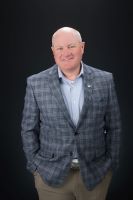
John Scanga, PhD

John Scanga, PhD

Chief Scientific Officer for North American Meat Division

John received his B.S. degree in Animal Sciences, his M.S. degree in Meat Science in 1997, and his Ph.D. in Animal Sciences in 1999, all from Colorado State University in Fort Collins, CO.

He developed a connection to agriculture at an early age; through work on his family’s ranching operation in central Colorado. He enrolled at Colorado State University in the fall of 1992 majoring in Animal Sciences; he competed on the CSU Meat Judging Team in 1994 and worked as an employee in the meat laboratory where his interest in meat processing and the meat industry began to grow.

Following the completion of his M.S (1997) and Ph.D. (1999), John joined the faculty at Colorado State University as an Assistant Professor and Extension Meat Specialist. He managed the day-to-day operations of the Meat Science Teaching and Research Laboratory and was promoted to Associate Professor in 2005.  He then left the university and joined IEH Laboratories and Consulting Group in January of 2008 as Vice President of Technical Services, where he continued to merge scientific concepts with industrial applications for managing and improving the safety of meat and non-meat foods, and improving food processing plant operational efficiencies.  In addition, he provided clients with regulatory, crisis event, and HACCP training and support.

John joined Elanco Animal Health in November of 2009 as an Associate Senior Technical Consultant where he brought a consumer focus and an emphasis on balancing animal productivity and performance with consumer acceptability. His work there focused on red meat safety, red meat quality and international trade.

John has been an author or co-author on over 70 refereed scientific publications on red meat quality and safety and has presented the findings of his work through numerous invited in presentations both the U.S and internationally.  

John also has a passion for service.  He currently is the chair of the Colorado Beef Council and has served as President of the Weld RE-9 school board, Weld County Fair Board and is a member of the Highland High School FFA Advisory Committee. 

John and his wife Chauna live on a diversified farming operation in Ault, Colorado.  Their family time is consumed with agriculture, farming, riding reigning horses and traveling.  His hobbies include backcountry snowmobiling and bird hunting. He  also works as a visiting professor in the Department of Animal Sciences at Colorado State University, where he first started his academic career. 

Below are resources from Dr. Scanga:


Eurofins Craft Technologies recently became a gold member of the Algae Biomass Organization (ABO). Our team is excited to offer discounts and special rates to other ABO members. We answered some common questions about the ABO, membership benefits, and testing with Eurofins in this article.


Ethylene oxide is gaining attention in the food regulatory space. EtO was banned as a food fumigant in 1991 in the EU. While ethylene oxide is not banned for use in foods in the United States, it is important to understand the allowed tolerances in the US and EU, especially as regulations continue to evolve and online sales contribute to increasing overseas exports. This article outlines the uses and toxicity of EtO, US and EU regulations, and EtO analysis at Eurofins.


Food fraud is a widespread and worldwide problem. Watch this video to learn more about which products are most frequently impacted, and how it can impact your business.


Natural and synthetic food dyes are used in almost all industries. Understanding the potential for dye adulteration is critical to knowing how and why products are affected. Furthermore, testing with a third-party lab can lead to standardized product coloration and reliable ingredient claims. This White Paper introduces the types of food dyes, the benefits of testing, types of tests, and considerations for choosing a third-party lab.


We are pleased to present the attached method summary for multiresidue pesticide analysis. This method is in accordance with USP 561 and EP 2.8.13. Click to learn more about the pesticides covered with this method and their limits according to USP monographs.


Food fraud can result in serious public health consequences and damage to your brand's reputation. Learn about products at risk for food fraud and steps you can take to protect your company.


A new study published in JAMA Ophthalmology has found that lutein and zeaxanthin may be better alternatives to beta-carotene for supporting those inflicted with Age-Related Eye Disease (AREDS). This additional information may mean more lutein and zeaxanthin supplements on the market and more testing needed to verify suppliers.


The U.S. Department of Agriculture (USDA) implemented the National Bioengineered Food Disclosure Standard (NBFDS) in 2022. This regulation mandates clear labeling for retail food products containing bioengineered (BE) or 'GMO' ingredients, giving consumers more insight into what they are eating. In this guide, we will explore what qualifies as a bioengineered food, which products are subject to labeling, and how businesses can comply with the regulations outlined in NBFDS.


What are the labeling standards for gluten-free foods? Gain insights on the FDA's definition of gluten-free products and foods and how to meet voluntary labeling standards.


As exponential growth of plant-based foods continues, so does research and innovation with plant proteins. But what is the difference between proteins from plants versus animal sources? What challenges do scientists need to overcome? Learn more in the article!


<< < 1 2 3 4 5 6 7 8 9 10 > >>

https://www.eurofinsus.com/food-testing