
JavaScript is disabled. Please enable to continue!

Mobile search icon
More Resources >> Our People >> John Scanga

John Scanga

Sidebar Image
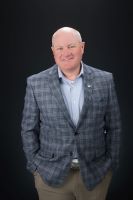
John Scanga, PhD

John Scanga, PhD

Chief Scientific Officer for North American Meat Division

John received his B.S. degree in Animal Sciences, his M.S. degree in Meat Science in 1997, and his Ph.D. in Animal Sciences in 1999, all from Colorado State University in Fort Collins, CO.

He developed a connection to agriculture at an early age; through work on his family’s ranching operation in central Colorado. He enrolled at Colorado State University in the fall of 1992 majoring in Animal Sciences; he competed on the CSU Meat Judging Team in 1994 and worked as an employee in the meat laboratory where his interest in meat processing and the meat industry began to grow.

Following the completion of his M.S (1997) and Ph.D. (1999), John joined the faculty at Colorado State University as an Assistant Professor and Extension Meat Specialist. He managed the day-to-day operations of the Meat Science Teaching and Research Laboratory and was promoted to Associate Professor in 2005.  He then left the university and joined IEH Laboratories and Consulting Group in January of 2008 as Vice President of Technical Services, where he continued to merge scientific concepts with industrial applications for managing and improving the safety of meat and non-meat foods, and improving food processing plant operational efficiencies.  In addition, he provided clients with regulatory, crisis event, and HACCP training and support.

John joined Elanco Animal Health in November of 2009 as an Associate Senior Technical Consultant where he brought a consumer focus and an emphasis on balancing animal productivity and performance with consumer acceptability. His work there focused on red meat safety, red meat quality and international trade.

John has been an author or co-author on over 70 refereed scientific publications on red meat quality and safety and has presented the findings of his work through numerous invited in presentations both the U.S and internationally.  

John also has a passion for service.  He currently is the chair of the Colorado Beef Council and has served as President of the Weld RE-9 school board, Weld County Fair Board and is a member of the Highland High School FFA Advisory Committee. 

John and his wife Chauna live on a diversified farming operation in Ault, Colorado.  Their family time is consumed with agriculture, farming, riding reigning horses and traveling.  His hobbies include backcountry snowmobiling and bird hunting. He  also works as a visiting professor in the Department of Animal Sciences at Colorado State University, where he first started his academic career. 

Below are resources from Dr. Scanga:


With a more wellness-conscious consumer market, virgin olive oil has an opportunity to attract customers with its health-boosting properties tied to polyphenols. In our webinar, John Reuther discuses pros and cons of testing methods for polyphenol determination and introduces a new quantitative method. Then, Mary Mori of California Olive Ranch discusses California agriculture regulations regarding discharge of waste streams and effect in field.


Have you ever wondered about the journey of your sample once you’ve sent it to Eurofins? This handy infographic shows the life cycle of a sample once we’ve received it in our laboratory, from labeling and identification through analysis and reporting.


This study seeks to develop and validate a method for identifying and quantifying four bioactive forms of vitamin B12 (adenosylcobalamin, cyanocobalamin, hydroxocobalamin, and methylcobalamin) from dietary ingredients and supplements, as a consensus quality control protocol for dietary supplement labeling and manufacturing.


This infographic highlights the most frequent reasons for variability of laboratory results and measures third party laboratories implement to address variability.


Air, gas, water, and ice used in manufacturing processes must be properly maintained and regularly tested in order to ensure compliance with regulations and safety for consumers. Our webinar aims to clear the mystery surrounding these standards and regulations. Viewers will learn how to navigate the appropriate requirements while protecting their customers.


Here we are in the third post of a series focusing on pet food, pet treat, and pet supplement testing considerations. We have explored guaranteed analysis and other testing considerations such as shelf life and microbes. This time around I’ll expand on a topic that people often view as less a food safety issue and more of a palatability issue: Rancidity.


This series is focused on getting new pet food, pet treat, and pet supplement businesses headed down the right path.


Whether you’re considering selling your homemade pet treats or starting a new pet treat business, one of the first steps you may find yourself tasked with is determining what a guaranteed analysis is. Figuring out how to have a product tested and what information is pertinent can be intimidating – the information in this post is intended to get you started in the right direction.


Not all rancidity tests are equally appropriate. Here are some helpful hints regarding how each test is performed, what it reveals, limitations and which may be more important for a given scenario.


In this digital conference Eurofins experts, industry partners and food safety thought leaders guide attendees through a discussion of the latest solutions and controls for persistent pet food manufacturing issues.


<< < 1 2 3 4 5 6 7 8 9 10 11 12 13 14 15 16 > >>

https://www.eurofinsus.com/food-testing