
JavaScript is disabled. Please enable to continue!

Mobile search icon
More Resources >> Our People >> John Scanga

John Scanga

Sidebar Image
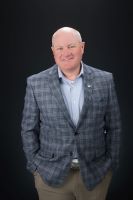
John Scanga, PhD

John Scanga, PhD

Chief Scientific Officer for North American Meat Division

John received his B.S. degree in Animal Sciences, his M.S. degree in Meat Science in 1997, and his Ph.D. in Animal Sciences in 1999, all from Colorado State University in Fort Collins, CO.

He developed a connection to agriculture at an early age; through work on his family’s ranching operation in central Colorado. He enrolled at Colorado State University in the fall of 1992 majoring in Animal Sciences; he competed on the CSU Meat Judging Team in 1994 and worked as an employee in the meat laboratory where his interest in meat processing and the meat industry began to grow.

Following the completion of his M.S (1997) and Ph.D. (1999), John joined the faculty at Colorado State University as an Assistant Professor and Extension Meat Specialist. He managed the day-to-day operations of the Meat Science Teaching and Research Laboratory and was promoted to Associate Professor in 2005.  He then left the university and joined IEH Laboratories and Consulting Group in January of 2008 as Vice President of Technical Services, where he continued to merge scientific concepts with industrial applications for managing and improving the safety of meat and non-meat foods, and improving food processing plant operational efficiencies.  In addition, he provided clients with regulatory, crisis event, and HACCP training and support.

John joined Elanco Animal Health in November of 2009 as an Associate Senior Technical Consultant where he brought a consumer focus and an emphasis on balancing animal productivity and performance with consumer acceptability. His work there focused on red meat safety, red meat quality and international trade.

John has been an author or co-author on over 70 refereed scientific publications on red meat quality and safety and has presented the findings of his work through numerous invited in presentations both the U.S and internationally.  

John also has a passion for service.  He currently is the chair of the Colorado Beef Council and has served as President of the Weld RE-9 school board, Weld County Fair Board and is a member of the Highland High School FFA Advisory Committee. 

John and his wife Chauna live on a diversified farming operation in Ault, Colorado.  Their family time is consumed with agriculture, farming, riding reigning horses and traveling.  His hobbies include backcountry snowmobiling and bird hunting. He  also works as a visiting professor in the Department of Animal Sciences at Colorado State University, where he first started his academic career. 

Below are resources from Dr. Scanga:


Watch this on-demand webinar to learn about the significant organic food industry growth. The webinar provides an overview of the impact of SOE on certified entities, and a discussion on how to build risk management systems to meet regulatory and consumer expectations for your products' organic integrity. Original airdate April 19, 2023.


Is your risk assessment complete? E.coli, Listeria, Salmonella, Campylobacter, Vibrio, etc. The long list of bacterial pathogens have become common to those managing & developing food safety plans. However, when sitting down for your review of hazards in your HACCP & HARPC plans, it can be easy to forget that bacteria aren’t the only microbes associated with food. In fact, a large share of foodborne illness are caused by viral threats.


The research and development team of Eurofins Microbiology Laboratories, Inc. set out to better understand STEC growth on lettuce by designing an experiment to observe the limits of detection by real-time PCR using bacteria that were cold-stressed against those grown under non-stressed conditions. This white paper explains further.


Ensure food safety of fresh produce to avoid a Cyclospora outbreak. Learn more about Cyclospora in commercial produce and how to detect and mitigate risk of contamination.


Learn how mushrooms can become contaminated with bacteria and what you can do to protect your consumers. Eurofins provides comprehensive food testing services.


Fresh produce undergoes several steps to reduce risk of pathogen contamination, but did you know that Nanobubble technology could be one of them? Nanobubbles are very small (70-120 nanometers) gas bubbles that exhibit interesting physical properties due to its size. It has been a relatively new field of research that could provide significant improvements to food production and water treatment.


The U.S. Department of Agriculture (USDA) implemented the National Bioengineered Food Disclosure Standard (NBFDS) in 2022. This regulation mandates clear labeling for retail food products containing bioengineered (BE) or 'GMO' ingredients, giving consumers more insight into what they are eating. In this guide, we will explore what qualifies as a bioengineered food, which products are subject to labeling, and how businesses can comply with the regulations outlined in NBFDS.


New Rapid Pathogen Testing Services. Eurofins Microbiology Laboratories, Inc. is pleased to share our new Enteric Pathogen Risk Indicator (EPRI™) Testing. This new service is a rapid approach to risk identification and management using fast genetic technology (PCR) with the benefits of an indicator test. In addition, we can screen for Salmonella and Shiga toxigenic E. coli at the same time in one assay.


When we send a sample of food for testing, we generally think about a pretty simple system where we submit a sample, wait a bit of time, and then find out if the target organism is there. What we often forget is just how complex our food, processing systems, and environments truly are.


Are you stuck on the proverbial micro testing loop? Do you submit a sample to the lab, get a non-compliant result, fill out some paperwork, visit a field and then just start right back over at step one? If so watch this webinar on how to fix those issues.


<< < 1 2 3 4 > >>

https://www.eurofinsus.com/food-testing