
JavaScript is disabled. Please enable to continue!

Mobile search icon
More Resources >> Our People >> John Scanga

John Scanga

Sidebar Image
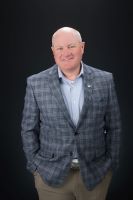
John Scanga, PhD

John Scanga, PhD

Chief Scientific Officer for North American Meat Division

John received his B.S. degree in Animal Sciences, his M.S. degree in Meat Science in 1997, and his Ph.D. in Animal Sciences in 1999, all from Colorado State University in Fort Collins, CO.

He developed a connection to agriculture at an early age; through work on his family’s ranching operation in central Colorado. He enrolled at Colorado State University in the fall of 1992 majoring in Animal Sciences; he competed on the CSU Meat Judging Team in 1994 and worked as an employee in the meat laboratory where his interest in meat processing and the meat industry began to grow.

Following the completion of his M.S (1997) and Ph.D. (1999), John joined the faculty at Colorado State University as an Assistant Professor and Extension Meat Specialist. He managed the day-to-day operations of the Meat Science Teaching and Research Laboratory and was promoted to Associate Professor in 2005.  He then left the university and joined IEH Laboratories and Consulting Group in January of 2008 as Vice President of Technical Services, where he continued to merge scientific concepts with industrial applications for managing and improving the safety of meat and non-meat foods, and improving food processing plant operational efficiencies.  In addition, he provided clients with regulatory, crisis event, and HACCP training and support.

John joined Elanco Animal Health in November of 2009 as an Associate Senior Technical Consultant where he brought a consumer focus and an emphasis on balancing animal productivity and performance with consumer acceptability. His work there focused on red meat safety, red meat quality and international trade.

John has been an author or co-author on over 70 refereed scientific publications on red meat quality and safety and has presented the findings of his work through numerous invited in presentations both the U.S and internationally.  

John also has a passion for service.  He currently is the chair of the Colorado Beef Council and has served as President of the Weld RE-9 school board, Weld County Fair Board and is a member of the Highland High School FFA Advisory Committee. 

John and his wife Chauna live on a diversified farming operation in Ault, Colorado.  Their family time is consumed with agriculture, farming, riding reigning horses and traveling.  His hobbies include backcountry snowmobiling and bird hunting. He  also works as a visiting professor in the Department of Animal Sciences at Colorado State University, where he first started his academic career. 

Below are resources from Dr. Scanga:


Foreign materials and off-odor or off-flavors in a product may result in loss of consumer trust or a damaged brand reputation. In the worst cases, these issues can be dangerous. The first step in eliminating foreign material and off-odor or off-flavor risk is understanding the sources of contamination, including packaging and production issues and chemical and microbial contamination. This blog explains the benefits of foreign material, off-odor, and off-flavor analysis, the sources of contamination, and the tests available for testing.


We recently hosted a webinar titled "GC-MS Techniques for Troubleshooting Off-Flavor, Off-Odor, and Flavor Scalping in Foods and Beverages Webinar." This Q&A with Dr. Jamie Willems provides a deeper look in to common questions associated with GC-MS, contaminant detection, and out capabilities at Eurofins.


When a product doesn't taste or smell right, it is a good indicator of contamination or packaging and processing issues. GCMS analysis is reliable method for finding the cause of off-odor or flavor and getting your products back to normal! This infographic provides an overview and a case study of how GCMS is used for off-odor and flavor analysis.


Learn about frequent causes of off-flavor, off-odor, and flavor scalping in packaged foods, beverages, and pet food products, including analytical techniques ranging from GCMS to ICP to LCMSMS for troubleshooting and detection, with a focus on SPME-GC-MS analysis. Learn how improper product packaging, production, or transportation issues can cause your product to be recalled. Factors that can negatively impact flavor and aroma. The analytical techniques range from GCMS to ICP to LCMSMS for troubleshooting and detection.


Your goal is to manufacture a safe product that meets the claims on your label.  How are you ensuring that your finished product will do this?  Proactively, or retroactively?  Putting a proactive plan in place to assess ingredient safety and quality is key to producing finished products that meet all of your quality standards.  Having a partnership with an accredited, independent (third-party) laboratory just in case something goes wrong is a must.


How can FT-IR be used for identifying foreign material in my product? David Riggs, President of Eurofins SF Analytical discusses this topic in this short video. Eurofins publishes our Ask an Expert Series weekly on our social media platforms.


How do you determine the identity of a unknown material I found in my product? Patricia Quinn from Eurofins SF Analytical in New Berlin, WI discusses this topic in this short video. Eurofins publishes our Ask an Expert Series weekly on our social media platforms.


Off-flavor and off-odor issues can damage your brand reputation and even result in recall. Watch our webinar to learn how Eurofins uses gas chromatography with mass spectral detection (GC-MS) to provide solutions for off-flavors, off-odors, and flavor scalping caused by improper product packaging, or production or transportation issues. This webinar was originally recorded on October 01, 2020.


Are you a food safety, quality, design, packaging production, or risk mitigation professional? Learn the top reasons for packaged food, beverage, and ingredient failures—and what to do when faced with a crisis scenario.


This white paper explores off-flavor and odor investigations performed by Eurofins SFA. Authored by Eurofins' scientist Jamie Willems Ph.D.


<< < 1 2 3 4 > >>

https://www.eurofinsus.com/food-testing