
JavaScript is disabled. Please enable to continue!

Mobile search icon
More Resources >> Our People >> John Scanga

John Scanga

Sidebar Image
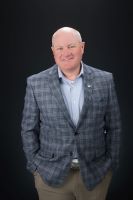
John Scanga, PhD

John Scanga, PhD

Chief Scientific Officer for North American Meat Division

John received his B.S. degree in Animal Sciences, his M.S. degree in Meat Science in 1997, and his Ph.D. in Animal Sciences in 1999, all from Colorado State University in Fort Collins, CO.

He developed a connection to agriculture at an early age; through work on his family’s ranching operation in central Colorado. He enrolled at Colorado State University in the fall of 1992 majoring in Animal Sciences; he competed on the CSU Meat Judging Team in 1994 and worked as an employee in the meat laboratory where his interest in meat processing and the meat industry began to grow.

Following the completion of his M.S (1997) and Ph.D. (1999), John joined the faculty at Colorado State University as an Assistant Professor and Extension Meat Specialist. He managed the day-to-day operations of the Meat Science Teaching and Research Laboratory and was promoted to Associate Professor in 2005.  He then left the university and joined IEH Laboratories and Consulting Group in January of 2008 as Vice President of Technical Services, where he continued to merge scientific concepts with industrial applications for managing and improving the safety of meat and non-meat foods, and improving food processing plant operational efficiencies.  In addition, he provided clients with regulatory, crisis event, and HACCP training and support.

John joined Elanco Animal Health in November of 2009 as an Associate Senior Technical Consultant where he brought a consumer focus and an emphasis on balancing animal productivity and performance with consumer acceptability. His work there focused on red meat safety, red meat quality and international trade.

John has been an author or co-author on over 70 refereed scientific publications on red meat quality and safety and has presented the findings of his work through numerous invited in presentations both the U.S and internationally.  

John also has a passion for service.  He currently is the chair of the Colorado Beef Council and has served as President of the Weld RE-9 school board, Weld County Fair Board and is a member of the Highland High School FFA Advisory Committee. 

John and his wife Chauna live on a diversified farming operation in Ault, Colorado.  Their family time is consumed with agriculture, farming, riding reigning horses and traveling.  His hobbies include backcountry snowmobiling and bird hunting. He  also works as a visiting professor in the Department of Animal Sciences at Colorado State University, where he first started his academic career. 

Below are resources from Dr. Scanga:


Is your Astaxanthin natural or synthetic? Review this infographic to learn more about astaxanthin.


Mushroom toxicity comes from many sources, including the soil, processing, and the mushrooms themselves. This infographic outlines sources of contamination, as well as steps to take to minimize the risk of toxins entering the food chain.


IR spectroscopy, including NIR and mid-IR, is a useful technology for food and beverage analysis. The experts at Eurofins QTA recently answered five common questions about IR spectroscopy to help you determine if it is right for you and your products. This infographic provides an overview of how IR spectroscopy is helpful for product analysis.


Navigating the testing options and regulatory requirements for pet foods and treats gets confusing, even for long standing companies. This infographic provides an overview of the key components of a testing plan for pet foods, including nutritional analysis, microbial testing, and product formulation.


Eurofins Central Analytical Laboratories (CAL) offers unrivaled expertise and an ISO 17025:2017 accreditation for all aspects of tea testing, including dried and fresh tea analysis, brewed service testing, and pesticide analysis. This flyer provides an overview of ECAL's tea offerings and the benefits of testing with Eurofins.


As the global leader in food testing, Eurofins has a few tips as you prepare your sample for submission to our laboratories. These tools will inform you how to expedite the testing process, ensure sample integrity and keep your samples on track. Connect with us today to get started!


After collecting your samples making sure that they arrive at the laboratory at the correct temperature is the main priority.  This guide walks through FIVE key steps for you to follow.


Botanical supplement contamination can be dangerous, and preventing contamination starts with understanding its sources. This infographic explains different sources of contamination in a botanical supplement's life cycle - from growing in the soil to packaging and storage.


Chemical and microbial exposure are the most common types of contamination during food processing. Understanding the sources of each type of contamination helps to effectively prevent problems before they arise. This infographic below explains various contamination sources in food, feed, and botanical products. These include residual solvents, storage issues, improper handling, and more.


When a product doesn't taste or smell right, it is a good indicator of contamination or packaging and processing issues. GCMS analysis is reliable method for finding the cause of off-odor or flavor and getting your products back to normal! This infographic provides an overview and a case study of how GCMS is used for off-odor and flavor analysis.


<< < 1 2 3 4 5 > >>

https://www.eurofinsus.com/food-testing