
JavaScript is disabled. Please enable to continue!

Mobile search icon
More Resources >> Our People >> John Scanga

John Scanga

Sidebar Image
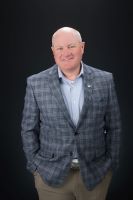
John Scanga, PhD

John Scanga, PhD

Chief Scientific Officer for North American Meat Division

John received his B.S. degree in Animal Sciences, his M.S. degree in Meat Science in 1997, and his Ph.D. in Animal Sciences in 1999, all from Colorado State University in Fort Collins, CO.

He developed a connection to agriculture at an early age; through work on his family’s ranching operation in central Colorado. He enrolled at Colorado State University in the fall of 1992 majoring in Animal Sciences; he competed on the CSU Meat Judging Team in 1994 and worked as an employee in the meat laboratory where his interest in meat processing and the meat industry began to grow.

Following the completion of his M.S (1997) and Ph.D. (1999), John joined the faculty at Colorado State University as an Assistant Professor and Extension Meat Specialist. He managed the day-to-day operations of the Meat Science Teaching and Research Laboratory and was promoted to Associate Professor in 2005.  He then left the university and joined IEH Laboratories and Consulting Group in January of 2008 as Vice President of Technical Services, where he continued to merge scientific concepts with industrial applications for managing and improving the safety of meat and non-meat foods, and improving food processing plant operational efficiencies.  In addition, he provided clients with regulatory, crisis event, and HACCP training and support.

John joined Elanco Animal Health in November of 2009 as an Associate Senior Technical Consultant where he brought a consumer focus and an emphasis on balancing animal productivity and performance with consumer acceptability. His work there focused on red meat safety, red meat quality and international trade.

John has been an author or co-author on over 70 refereed scientific publications on red meat quality and safety and has presented the findings of his work through numerous invited in presentations both the U.S and internationally.  

John also has a passion for service.  He currently is the chair of the Colorado Beef Council and has served as President of the Weld RE-9 school board, Weld County Fair Board and is a member of the Highland High School FFA Advisory Committee. 

John and his wife Chauna live on a diversified farming operation in Ault, Colorado.  Their family time is consumed with agriculture, farming, riding reigning horses and traveling.  His hobbies include backcountry snowmobiling and bird hunting. He  also works as a visiting professor in the Department of Animal Sciences at Colorado State University, where he first started his academic career. 

Below are resources from Dr. Scanga:


In this informative webinar, Eurofins SF Analytical scientists explain the considerations your company should factor in to mitigate risk and comply with applicable regulations including new analytical techniques to meet the ever-changing compendia (USP, EP, ACS, FCC/NF, JECFA, etc.)


Ethylene oxide is a highly reactive gas used in some countries to inhibit microbial contamination in certain food products.


Opportunity is rapidly growing for new feed ingredients intended to improve the well-being of both companion animals and livestock. Our webinar aims to address the unique analytical, nutritional, and regulatory challenges that accompany novel animal food ingredients.


This presentation reviews sample quality criteria, and the parameters that should be considered in order to produce meaningful and defensible measurement data. A review of the purpose of standardized methods is also presented, and considerations for when it is necessary to apply a modified procedure or an alternate method.


This presentation discusses further on adulteration risks in botanicals, reviews various quality control analytical strategies and research advances in analytical sciences for dietary supplements and ingredients.


Food fraud, also known as economically motivated adulteration, is widespread worldwide.  Food fraud involves deliberate and intentional substitution, addition, tampering or misrepresentation of food, food ingredients or food packaging, labeling, product information or false or misleading statements made about a product for economic gain.  Food fraud can adversely impact consumer health, product quality, and brand reputation.


Validation of aseptic fillers intended for the production of low-acid, shelf-stable products is a core requirement of the FDA’s low-acid canned food (LACF) regulations (21CFR113 and 108.35). Microbiological challenges of the aseptic zone and packaging material sterilization cycles are important components of the validation process. These challenges are often conducted at the production site using non-pathogenic surrogate organisms that mimic the resistance of the pertinent target pathogen. This presentation will provide a brief history of the use of such surrogates for the validation of low-acid aseptic fillers along with the approach we have used to qualify the surrogates as adequate for the intended technology.”


When we send a sample of food for testing, we generally think about a pretty simple system where we submit a sample, wait a bit of time, and then find out if the target organism is there. What we often forget is just how complex our food, processing systems, and environments truly are.


Food and supplement testing has been a necessary part of the safe supply chain which means so have the chemicals that go along with this and until today, there have been very few options that positively affect the environment. Supercritical Fluid Extraction with Supercritical Fluid Chromatography now offers an environmentally safer method that is also faster, as sensitive and as selective as your current methods. We present an alternative way to extract and measure vitamins.


Join our team of presenters at Eurofins Microbiology Laboratories for an in-depth webinar all about rapid microbiological methods. They presented on the range of methods available, as well as the technologies behind them, while also exploring factors that affect their performance.  Learn what to consider when selecting a rapid method such as sensitivity, validation status, and speed.  Practical considerations around the method applications will be addressed.


<< < 1 2 3 4 5 6 7 8 9 10 11 12 > >>

https://www.eurofinsus.com/food-testing