
JavaScript is disabled. Please enable to continue!

Mobile search icon
More Resources >> Our People >> John Scanga

John Scanga

Sidebar Image
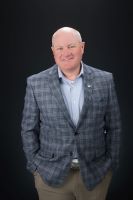
John Scanga, PhD

John Scanga, PhD

Chief Scientific Officer for North American Meat Division

John received his B.S. degree in Animal Sciences, his M.S. degree in Meat Science in 1997, and his Ph.D. in Animal Sciences in 1999, all from Colorado State University in Fort Collins, CO.

He developed a connection to agriculture at an early age; through work on his family’s ranching operation in central Colorado. He enrolled at Colorado State University in the fall of 1992 majoring in Animal Sciences; he competed on the CSU Meat Judging Team in 1994 and worked as an employee in the meat laboratory where his interest in meat processing and the meat industry began to grow.

Following the completion of his M.S (1997) and Ph.D. (1999), John joined the faculty at Colorado State University as an Assistant Professor and Extension Meat Specialist. He managed the day-to-day operations of the Meat Science Teaching and Research Laboratory and was promoted to Associate Professor in 2005.  He then left the university and joined IEH Laboratories and Consulting Group in January of 2008 as Vice President of Technical Services, where he continued to merge scientific concepts with industrial applications for managing and improving the safety of meat and non-meat foods, and improving food processing plant operational efficiencies.  In addition, he provided clients with regulatory, crisis event, and HACCP training and support.

John joined Elanco Animal Health in November of 2009 as an Associate Senior Technical Consultant where he brought a consumer focus and an emphasis on balancing animal productivity and performance with consumer acceptability. His work there focused on red meat safety, red meat quality and international trade.

John has been an author or co-author on over 70 refereed scientific publications on red meat quality and safety and has presented the findings of his work through numerous invited in presentations both the U.S and internationally.  

John also has a passion for service.  He currently is the chair of the Colorado Beef Council and has served as President of the Weld RE-9 school board, Weld County Fair Board and is a member of the Highland High School FFA Advisory Committee. 

John and his wife Chauna live on a diversified farming operation in Ault, Colorado.  Their family time is consumed with agriculture, farming, riding reigning horses and traveling.  His hobbies include backcountry snowmobiling and bird hunting. He  also works as a visiting professor in the Department of Animal Sciences at Colorado State University, where he first started his academic career. 

Below are resources from Dr. Scanga:


Join our team of presenters at Eurofins Microbiology Laboratories for an in-depth webinar all about rapid microbiological methods. They presented on the range of methods available, as well as the technologies behind them, while also exploring factors that affect their performance.  Learn what to consider when selecting a rapid method such as sensitivity, validation status, and speed.  Practical considerations around the method applications will be addressed.


Learn about the most common food pathogens and their impact in food handling and production. Testing your products can help manage risk of contamination from pathogens. Partner with Eurofins for all of your food safety testing needs.


Eurofins DQCI Announces Partnership with Southeast Milk, Inc. (SMI) to Assume Operational Responsibility of Belleview, Florida Site. Read more about this partnership in this press release.


Instrument calibration management is the key to mass balance optimization in dairy plants. Eurofins DQCI is the dairy industry’s leading analytical laboratory, adhering to the highest standards supporting infrared and near-infrared technology worldwide.


What species of microorganisms are present in your dairy products? Learn why you need microbiome monitoring for your dairy products.


This publication will cover two additional important points: 1.) How to choose the right calibration set for your application 2.) What criteria you must have for optimal calibration samples


Check out our infographic on the Do's and Dont's of IR Calibration for Dairy Plants. We have also included some daily, weekly, and monthly tips on how to best maintain your IR instrument.
Keywords: Infographic Dairy


This case study makes the financial case for why your company should calibrate its IR instrument more frequently.


Does your sample contain any form of animal byproduct? Is your sample being shipped overseas to one of Eurofins’ partner labs for testing? If both these questions are true for your sample, you’ll need a heating certificate to get through customs. This handy infographic shows examples of samples and tests that may require a heating certificate.


A large dairy product manufacturer expressed interest in an alternate PCR method for the detection of Genus Listeria in their environmental and product testing program due to recurring false-positive detections and high levels of environmental Genus Listeria positives in the recent past. Our objective was to compare the performance of two PCR based methods for Genus Listeria detection.


<< < 1 2 3 4 > >>

https://www.eurofinsus.com/food-testing