
JavaScript is disabled. Please enable to continue!

Mobile search icon
More Resources >> Our People >> John Scanga

John Scanga

Sidebar Image
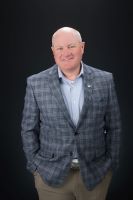
John Scanga, PhD

John Scanga, PhD

Chief Scientific Officer for North American Meat Division

John received his B.S. degree in Animal Sciences, his M.S. degree in Meat Science in 1997, and his Ph.D. in Animal Sciences in 1999, all from Colorado State University in Fort Collins, CO.

He developed a connection to agriculture at an early age; through work on his family’s ranching operation in central Colorado. He enrolled at Colorado State University in the fall of 1992 majoring in Animal Sciences; he competed on the CSU Meat Judging Team in 1994 and worked as an employee in the meat laboratory where his interest in meat processing and the meat industry began to grow.

Following the completion of his M.S (1997) and Ph.D. (1999), John joined the faculty at Colorado State University as an Assistant Professor and Extension Meat Specialist. He managed the day-to-day operations of the Meat Science Teaching and Research Laboratory and was promoted to Associate Professor in 2005.  He then left the university and joined IEH Laboratories and Consulting Group in January of 2008 as Vice President of Technical Services, where he continued to merge scientific concepts with industrial applications for managing and improving the safety of meat and non-meat foods, and improving food processing plant operational efficiencies.  In addition, he provided clients with regulatory, crisis event, and HACCP training and support.

John joined Elanco Animal Health in November of 2009 as an Associate Senior Technical Consultant where he brought a consumer focus and an emphasis on balancing animal productivity and performance with consumer acceptability. His work there focused on red meat safety, red meat quality and international trade.

John has been an author or co-author on over 70 refereed scientific publications on red meat quality and safety and has presented the findings of his work through numerous invited in presentations both the U.S and internationally.  

John also has a passion for service.  He currently is the chair of the Colorado Beef Council and has served as President of the Weld RE-9 school board, Weld County Fair Board and is a member of the Highland High School FFA Advisory Committee. 

John and his wife Chauna live on a diversified farming operation in Ault, Colorado.  Their family time is consumed with agriculture, farming, riding reigning horses and traveling.  His hobbies include backcountry snowmobiling and bird hunting. He  also works as a visiting professor in the Department of Animal Sciences at Colorado State University, where he first started his academic career. 

Below are resources from Dr. Scanga:



Infrared spectroscopy is a powerful analytical tool for rapid, nondestructive measurement. But despite its advantages, IR often develops a reputation for being unreliable or not accurate as primary methods. Keep reading to learn more about how to build and validate a reliable model.


IR spectroscopy, including NIR and mid-IR, is a useful technology for food and beverage analysis. The experts at Eurofins QTA recently answered five common questions about IR spectroscopy to help you determine if it is right for you and your products. This infographic provides an overview of how IR spectroscopy is helpful for product analysis.


Eurofins Microbiology Laboratories, Inc (Lafayette, CO) is excited to announce it has been certified by the Colorado Department of Public Health and Environment (CDPHE) to conduct microbial hemp compliance testing for industrial hemp and hemp derived products.


Gummy supplements continue to trend among consumers, but this matrix can be challenging to test. How does Eurofins address these challenges? Read about the answer from Jeff Stassi, Sr. Analytical Services Manager with Eurofins Food Chemistry Testing in Madison, WI.


This article outlines what ISO 17025:2017 is, and why it is important to choose an accredited lab for testing. An FAQ section details the process and technicalities of ISO accreditations and emphasizes the role of accreditations in providing reliable results.


This webinar discusses current analytical trends, focusing on low level cannabinoids testing and meeting stringent limits for pesticide residue testing. We briefly review navigating API and OTC testing to meet GMP requirements. Finally, we share updates related to hemp and feed, as well as the certification process of the USHA.


Eurofins QTA offers a unique service by testing using infrared lights. Learn about what infrared is, how it works, how QTA differentiates from other providers, How to convert to infrared testing, and how to get started with QTA.


Eurofins is proud to announce that our method for determining potency in hemp has been approved and validated by the AOAC.


Eurofins has completed the development and validation of a ultra-high-performance liquid chromatography tandem mass spectrometry (UHPLC-MS/MS) method for low-level quantification in CBD isolate matrices.


In this article read about how Eurofins QTA has developed a new method using NIR to test the THC levels of hemp and cannabis that are being utilized by state police to rapidly determine the THC levels of confiscated cannabis.


<< < 1 2 3 > >>

https://www.eurofinsus.com/food-testing