JavaScript is disabled. Please enable to continue!

Mobile search icon
More Resources >> Our People >> John Scanga

John Scanga

Sidebar Image
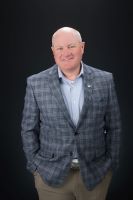
John Scanga, PhD

John Scanga, PhD

Chief Scientific Officer for North American Meat Division

John received his B.S. degree in Animal Sciences, his M.S. degree in Meat Science in 1997, and his Ph.D. in Animal Sciences in 1999, all from Colorado State University in Fort Collins, CO.

He developed a connection to agriculture at an early age; through work on his family’s ranching operation in central Colorado. He enrolled at Colorado State University in the fall of 1992 majoring in Animal Sciences; he competed on the CSU Meat Judging Team in 1994 and worked as an employee in the meat laboratory where his interest in meat processing and the meat industry began to grow.

Following the completion of his M.S (1997) and Ph.D. (1999), John joined the faculty at Colorado State University as an Assistant Professor and Extension Meat Specialist. He managed the day-to-day operations of the Meat Science Teaching and Research Laboratory and was promoted to Associate Professor in 2005.  He then left the university and joined IEH Laboratories and Consulting Group in January of 2008 as Vice President of Technical Services, where he continued to merge scientific concepts with industrial applications for managing and improving the safety of meat and non-meat foods, and improving food processing plant operational efficiencies.  In addition, he provided clients with regulatory, crisis event, and HACCP training and support.

John joined Elanco Animal Health in November of 2009 as an Associate Senior Technical Consultant where he brought a consumer focus and an emphasis on balancing animal productivity and performance with consumer acceptability. His work there focused on red meat safety, red meat quality and international trade.

John has been an author or co-author on over 70 refereed scientific publications on red meat quality and safety and has presented the findings of his work through numerous invited in presentations both the U.S and internationally.  

John also has a passion for service.  He currently is the chair of the Colorado Beef Council and has served as President of the Weld RE-9 school board, Weld County Fair Board and is a member of the Highland High School FFA Advisory Committee. 

John and his wife Chauna live on a diversified farming operation in Ault, Colorado.  Their family time is consumed with agriculture, farming, riding reigning horses and traveling.  His hobbies include backcountry snowmobiling and bird hunting. He  also works as a visiting professor in the Department of Animal Sciences at Colorado State University, where he first started his academic career. 

Below are resources from Dr. Scanga:
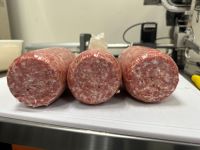


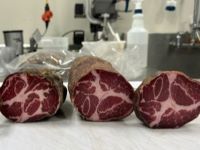
Explore how to comply with FSIS guidance for ready-to-eat fermented, salt-cured, and dried products with an effective validation study balancing scientific rigor, processing expertise, and craftsmanship. This article outlines how to achieve the right balance in your validation approach and how strong, data‑driven studies ultimately enhance the safety, consistency, and reliability of dried and fermented meat products.


This research poster evaluates how lactic acid interventions and high‑pressure pasteurization reduce Salmonella and Listeria in dried and fermented ready‑to‑eat salami.


Eurofins Rapid Microbiology Laboratories introduces the Advanced Learning Institute, offering accredited food safety training programs from HACCP, SQF, BRCGS, and FSPCA to practical courses on sanitation, Listeria management, auditing, and more for food manufacturers and professionals.


Selecting the right microbiological testing method isn’t just about speed or cost. It’s about risk management, product integrity, and regulatory compliance. Click to read about the strengths and limitations of different methodologies essential to avoid false negatives, regulatory citations, or costly recalls.


Bird Flu (H5N1) is spreading among birds, cattle, and humans. Experts warn it may be just one mutation away from human-to-human transmission.


Whole genome sequencing is no longer just a research tool. It’s a critical asset in food safety, outbreak response, and public health protection. Read our blog to learn more about whole genome sequencing and how it helps us better understand organisms like Salmonella and Cronobacter in food and infant formula.


Eurofins announces the formation of Eurofins Rapid Microbiology Laboratories, LLC, enhancing rapid testing speed, accuracy, and service for U.S. perishable markets.


Discover how Eurofins demonstrates a proof of concept for Whole Genome Sequencing (WGS) using Oxford Nanopore Technologies to accurately serotype and track Salmonella. Learn how this harmonized NGS approach improves global food safety with reliable, reproducible results.


This research poster demonstrates how BACGene real-time PCR enables accurate STEC detection in frozen vegetable matrices.


This research poster demonstrates how BACGene real-time PCR enables accurate Salmonella detection in frozen vegetable matrices.


<< < 1 2 3 4 5 6 7 8 9 10 11 12 13 14 15 > >>

https://www.eurofinsus.com/food-testing