
JavaScript is disabled. Please enable to continue!

Mobile search icon
More Resources >> Our People >> John Scanga

John Scanga

Sidebar Image
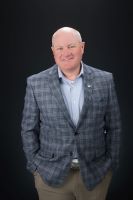
John Scanga, PhD

John Scanga, PhD

Chief Scientific Officer for North American Meat Division

John received his B.S. degree in Animal Sciences, his M.S. degree in Meat Science in 1997, and his Ph.D. in Animal Sciences in 1999, all from Colorado State University in Fort Collins, CO.

He developed a connection to agriculture at an early age; through work on his family’s ranching operation in central Colorado. He enrolled at Colorado State University in the fall of 1992 majoring in Animal Sciences; he competed on the CSU Meat Judging Team in 1994 and worked as an employee in the meat laboratory where his interest in meat processing and the meat industry began to grow.

Following the completion of his M.S (1997) and Ph.D. (1999), John joined the faculty at Colorado State University as an Assistant Professor and Extension Meat Specialist. He managed the day-to-day operations of the Meat Science Teaching and Research Laboratory and was promoted to Associate Professor in 2005.  He then left the university and joined IEH Laboratories and Consulting Group in January of 2008 as Vice President of Technical Services, where he continued to merge scientific concepts with industrial applications for managing and improving the safety of meat and non-meat foods, and improving food processing plant operational efficiencies.  In addition, he provided clients with regulatory, crisis event, and HACCP training and support.

John joined Elanco Animal Health in November of 2009 as an Associate Senior Technical Consultant where he brought a consumer focus and an emphasis on balancing animal productivity and performance with consumer acceptability. His work there focused on red meat safety, red meat quality and international trade.

John has been an author or co-author on over 70 refereed scientific publications on red meat quality and safety and has presented the findings of his work through numerous invited in presentations both the U.S and internationally.  

John also has a passion for service.  He currently is the chair of the Colorado Beef Council and has served as President of the Weld RE-9 school board, Weld County Fair Board and is a member of the Highland High School FFA Advisory Committee. 

John and his wife Chauna live on a diversified farming operation in Ault, Colorado.  Their family time is consumed with agriculture, farming, riding reigning horses and traveling.  His hobbies include backcountry snowmobiling and bird hunting. He  also works as a visiting professor in the Department of Animal Sciences at Colorado State University, where he first started his academic career. 

Below are resources from Dr. Scanga:


In this on-demand webinar, you will learn how to assess your microbiological food safety hazards related to these holding steps and determine if pathogen growth and/or toxin production may occur. We will discuss several case studies as well as different strategies you may employ to address these identified risks. Original airdate October 11, 2023.


Microbiological specifications are tools used to help manage risk in a food business. A specification defines the limits of acceptable and unacceptable conditions at important decision points in the manufacturing and distribution continuum, from ingredient specifications to final product specifications. In this white paper we will explore the types, uses, and creation of microbiological specifications.


In a recent webinar, experts answered some FAQs about probiotic enumeration, with a focus on the applications of flow cytometry to probiotic products. This blog provides an overview of the questions and answers, including the benefits of flow cytometry, how it compares to plate counts, and considerations for testing.


As the global leader in food testing, Eurofins has a few tips as you prepare your sample for submission to our laboratories. These tools will inform you how to expedite the testing process, ensure sample integrity and keep your samples on track. Connect with us today to get started!


Postbiotics are increasing in popularity, but are difficult to enumerate with traditional plating methods. Flow cytometry provides an avenue for measuring the dead or inactive cells in postbiotic products. This case study demonstrates how flow cytometry can assist with postbiotic enumeration when plate methods result in low cell counts.


After collecting your samples making sure that they arrive at the laboratory at the correct temperature is the main priority.  This guide walks through FIVE key steps for you to follow.


This OOS Response Guide breaks down best practices for preparation before an OOS result is received, environmental monitoring program OOS actions, product OOS actions, and follow-up actions to prevent the reoccurrence of contamination.


In this presentation, Dr. DeMarco illustrates how positive pathogen results can be used to make real improvements in processes, facilitating a safer production environment with lower overall contamination risks and safer food for the consumer. Original airdate July 12, 2023.


Eurofins Microbiology Laboratories, Inc (Lafayette, CO) is excited to announce it has been certified by the Colorado Department of Public Health and Environment (CDPHE) to conduct microbial hemp compliance testing for industrial hemp and hemp derived products.


In this webinar we review the call to action from the FDA, provide an overview of the technology of whole genome sequencing. Discuss the benefits of whole genome sequencing, and review the ways that Eurofins is ready to support your testing needs. Original Air Date May 18, 2023


<< < 1 2 3 4 5 6 7 8 9 10 11 12 13 14 15 > >>

https://www.eurofinsus.com/food-testing