
JavaScript is disabled. Please enable to continue!

Mobile search icon
More Resources >> Our People >> John Scanga

John Scanga

Sidebar Image
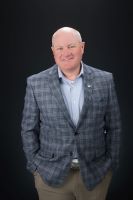
John Scanga, PhD

John Scanga, PhD

Chief Scientific Officer for North American Meat Division

John received his B.S. degree in Animal Sciences, his M.S. degree in Meat Science in 1997, and his Ph.D. in Animal Sciences in 1999, all from Colorado State University in Fort Collins, CO.

He developed a connection to agriculture at an early age; through work on his family’s ranching operation in central Colorado. He enrolled at Colorado State University in the fall of 1992 majoring in Animal Sciences; he competed on the CSU Meat Judging Team in 1994 and worked as an employee in the meat laboratory where his interest in meat processing and the meat industry began to grow.

Following the completion of his M.S (1997) and Ph.D. (1999), John joined the faculty at Colorado State University as an Assistant Professor and Extension Meat Specialist. He managed the day-to-day operations of the Meat Science Teaching and Research Laboratory and was promoted to Associate Professor in 2005.  He then left the university and joined IEH Laboratories and Consulting Group in January of 2008 as Vice President of Technical Services, where he continued to merge scientific concepts with industrial applications for managing and improving the safety of meat and non-meat foods, and improving food processing plant operational efficiencies.  In addition, he provided clients with regulatory, crisis event, and HACCP training and support.

John joined Elanco Animal Health in November of 2009 as an Associate Senior Technical Consultant where he brought a consumer focus and an emphasis on balancing animal productivity and performance with consumer acceptability. His work there focused on red meat safety, red meat quality and international trade.

John has been an author or co-author on over 70 refereed scientific publications on red meat quality and safety and has presented the findings of his work through numerous invited in presentations both the U.S and internationally.  

John also has a passion for service.  He currently is the chair of the Colorado Beef Council and has served as President of the Weld RE-9 school board, Weld County Fair Board and is a member of the Highland High School FFA Advisory Committee. 

John and his wife Chauna live on a diversified farming operation in Ault, Colorado.  Their family time is consumed with agriculture, farming, riding reigning horses and traveling.  His hobbies include backcountry snowmobiling and bird hunting. He  also works as a visiting professor in the Department of Animal Sciences at Colorado State University, where he first started his academic career. 

Below are resources from Dr. Scanga:


Third-party food safety testing is a surefire strategy to save money, boost quality, and increase profit margins. Find out how Eurofins can partner with your company.


This poster demonstrates how DNA sequencing can be an important tool in quality control, presumptive confirmations, and environmental monitoring.


Researchers from Eurofins Microbiology and Third Wave Bioactives collaborated to compare the microbial succession of refrigerated chicken noodle soup. The purpose of better understanding how various culture ingredients not only prevent microbial spoilage populations, but also dive deeper into how microbial populations evolve over time.


Pathogen detection in foods and environmental samples is a critical element in a food management system. This study set out to compare the robustness of Loop Mediated Amplification (LAMP) with that of PCR as illustrated by the detection threshold of Listeria and Salmonella spiked into culture broths previously incubated with various spices.


Enumeration provides the most basic required information with methodologies evolving to provide improved accuracy, precision, and turnaround times. Acoustic-assisted hydrodynamic flow cytometry incorporates the advance of using sound waves to align the particles in the fluid stream for counting, reducing the time to result.


As probiotic consumption rates continue to grow, stakeholders are demanding more information about the quantity, quality, and identity of organisms in probiotic products. Increasingly, flow cytometry is being used to address manufacturers’ and consumers’ demands, and has shown promise in rapidly providing precise quantitative and qualitative probiotic information.


For microbiology both quantity and quality matter, and microbiological testing methods are classified as being either quantitative or qualitative. Which category they fall into is based on what type of data is actually collected and reported.
Keywords: Blog Microbiology


Salmonella depends on an effective food safety program supported by robust Salmonella detection methods. Our objective is to explore recovery of Salmonella from a background of probiotic cultures and demonstrate and validate as effective, sensitive method for detecting Salmonella in probiotic cultures to protect public health.


The success of such programs hinges not only on consistent implementation and testing, but also on the effective swabbing of your plant. Below are the top 5 mistakes our experts see plants make when sampling and submitting swabs and sponges for testing.


This series is focused on getting new pet food, pet treat, and pet supplement businesses headed down the right path.


<< < 1 2 3 4 5 6 7 8 9 10 11 12 13 14 15 > >>

https://www.eurofinsus.com/food-testing