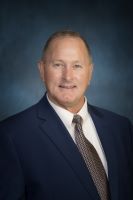
Keith Belk, PhD
Dr. Keith Belk is the Director of Eurofins’ Advanced Learning Institute and Professor and Holder of the Monfort Endowed Chair, Center for Meat Safety & Quality, Colorado State University (CSU), and as an Adjunct Professor in the Colorado School of Public Health. Previously, he served as Professor and Head of the Department of Animal Sciences at CSU. He earned B.S. and M.S. degrees from CSU, and a Ph.D. from Texas A&M University. He currently serves in a consulting role as the Director of Education for Eurofins Rapid Microbiology Laboratories, LLC. Dr. Belk is also a member of the International Committee for the National Western Stock Show, the Board of Directors for the International Stockmen’s Educational Foundation, on the Academic Advisory Committee for the Meat Institute Protein PACT, and on the technical advisory committees for Sustainable Beef, JBS, Colorado Premium Foods, and Hawkins.
Below are resources from Dr. Keith Belk:
In this blog post Dan Berg, Food Scientist, Analytical Services Manager for Eurofins Food Integrity & Innovation talks through the top 10 things you should know about the new nutritional facts panel rules.
This document describes the nutrition and supplement facts labels changes.
In this three-part series Dan Berg, Food Scientist, Analytical Services Manager at Eurofins talks through some of the more complicated issues and some related manners to consider for manufacturers in their efforts to meet the current regulations for Nutrition Facts and Supplement Facts panels. In this first part of the 3 part series, he discusses RACCs (Reference Amounts Customarily Consumed), Dietary Fiber, and Added Sugars.
In this three-part series Dan Berg, Food Scientist, Analytical Services Manager at Eurofins talks through some of the more complicated issues and some related manners to consider for manufacturers in their efforts to meet the current regulations for Nutrition Facts and Supplement Facts panels. In this second part of the three part series, he discusses vitamins (A, D, E, and Folic Acid/Folates).
In this three-part series Dan Berg, Food Scientist, Analytical Services Manager at Eurofins talks through some of the more complicated issues and some related manners to consider for manufacturers in their efforts to meet the current regulations for Nutrition Facts and Supplement Facts panels. In this the final part of the three part series, he discusses other related rules.
To address the industrial needs for rapid and economic analysis of steviol glycoside products we developed and validated a method. This method has the potential to be adapted as an industrial standard for the rapid and economic analysis for testing steviol glycosides.
This online presentation announces the establishment of a groundbreaking partnership. Backed by a grant from the US Department of Commerce, the United Natural Products Alliance (UNPA) and National Animal Supplement Council (NASC) have partnered with the China Society for Inspection and Testing (CSIT) and Eurofins to establish a qualification program focused on high-quality botanical and nutritional ingredients from China, and to provide new direct access to the Chinese consumer market for US dietary supplements for humans and pets.
Check out this informative email exchange between Keren Breiterman and Darryl Sullivan about trends in the Infant Formula testing space.
Our webinar hosted by Dr. Neal Craft, Chief Scientific Officer of Eurofins, explores the world of natural pigments, testing methods, and unique matrix challenges.
Does your sample contain any form of animal byproduct? Is your sample being shipped overseas to one of Eurofins’ partner labs for testing? If both these questions are true for your sample, you’ll need a heating certificate to get through customs. This handy infographic shows examples of samples and tests that may require a heating certificate.