Resource Library
Search >>
Welcome to the Eurofins US Food, Feed, and Supplement testing laboratories resource library.
Here you will find blogs, webinars, scientific articles, videos, case studies, white papers, and more about the services we offer for your industry.
Use the box below to search, or click on the service or industry link that you would like to review resources for and you will be taken to all of the resources we have on that topic. Please reach out to us if you are looking for information and do not see it here!
Search >>
Service:
Allergens
Authenticity
Contaminants
Dairy
Environmental Monitoring (EMP)
Food Microbiology Process Validation
GMO Testing
To view by media type, use the buttons below.


Eurofins News:

Liquid multivitamin supplements are growing in popularity, offering flexibility, convenience, and consumer-friendly dosing. However, testing liquid multivitamins presents significant analytical challenges due to their complex composition and the inherent instability of many vitamins.

Testing gummy supplements require specialized expertise, advanced preparation techniques, and a deep understanding of matrix effects. This is where the team at Eurofins Supplement & OTC in Madison, WI demonstrates proven leadership.

Acai (Euterpe oleracea) is widely used in dietary supplements and functional foods for its antioxidant-rich profile and its role in supporting healthy aging and overall wellness. As demand increases, so does the risk of adulteration. Learn how Eurofins can protect your product integrity and brand claims.

The recent FDA Dietary Supplement Innovation Public Meeting marks a pivotal moment for our industry. The agency is reexamining foundational concepts, including how dietary ingredients are defined and regulated.
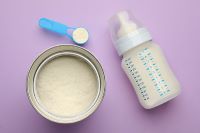
In today’s rapidly evolving infant nutrition landscape, manufacturers are under increasing pressure to deliver formulas that are both safe and nutritionally aligned with breast milk. One of the most important scientific tools supporting this effort is proteomics. Learn more about how Eurofins leading laboratory is ensuring product integrity, optimizing formulations, and confidently bringing new innovations to market.

Understanding and effectively formulating lipids has become essential for today’s product developers. Whether replacing synthetic preservatives, selecting alternative oils, delivering specific health benefits, or exploring novel lipid technologies, each decision has impacts. Learn how Eurofins testing can help.

As consumer demand for women-focused health solutions accelerates, successful product development requires more than trend alignment, it demands clinically grounded, format-ready ingredient strategies. Learn more about the insights of developing functional food, beverage, and supplements products that address key women’s health needs.

Innovation in the nutraceutical and functional food space is accelerating, but commercialization is struggling to keep pace. The conversation is shifting from “What can we formulate?” to a much harder question:
“What will actually work in a factory, at scale, for 12+ months?” Here are the biggest takeaways from Vitafoods Europe 2026.
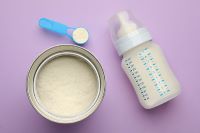
Per- and polyfluoroalkyl substances (PFAS) have become a growing focus for regulators, manufacturers, and consumers alike especially when it comes to foods intended for vulnerable populations such as infants. Learn about the importance of proactive PFAS testing and how Eurofins can help here.
A dietary supplement manufacturer submitted a finished capsule product and associated raw materials for identity verification testing. The materials were labeled and supplied as Astragalus membranaceus root. Learn how our Eurofins team assisted with this request.
Let's Connect
We deliver quality in all of our work, providing accurate results on time.